Restaurant Cleaning Service · Alameda

Restaurant Cleaning Alameda

Detailed kitchen, dining area, floor, and equipment care planned around your operating hours and food service requirements.

Kitchens and equipment

Dining areas and floors

Planned around operating hours

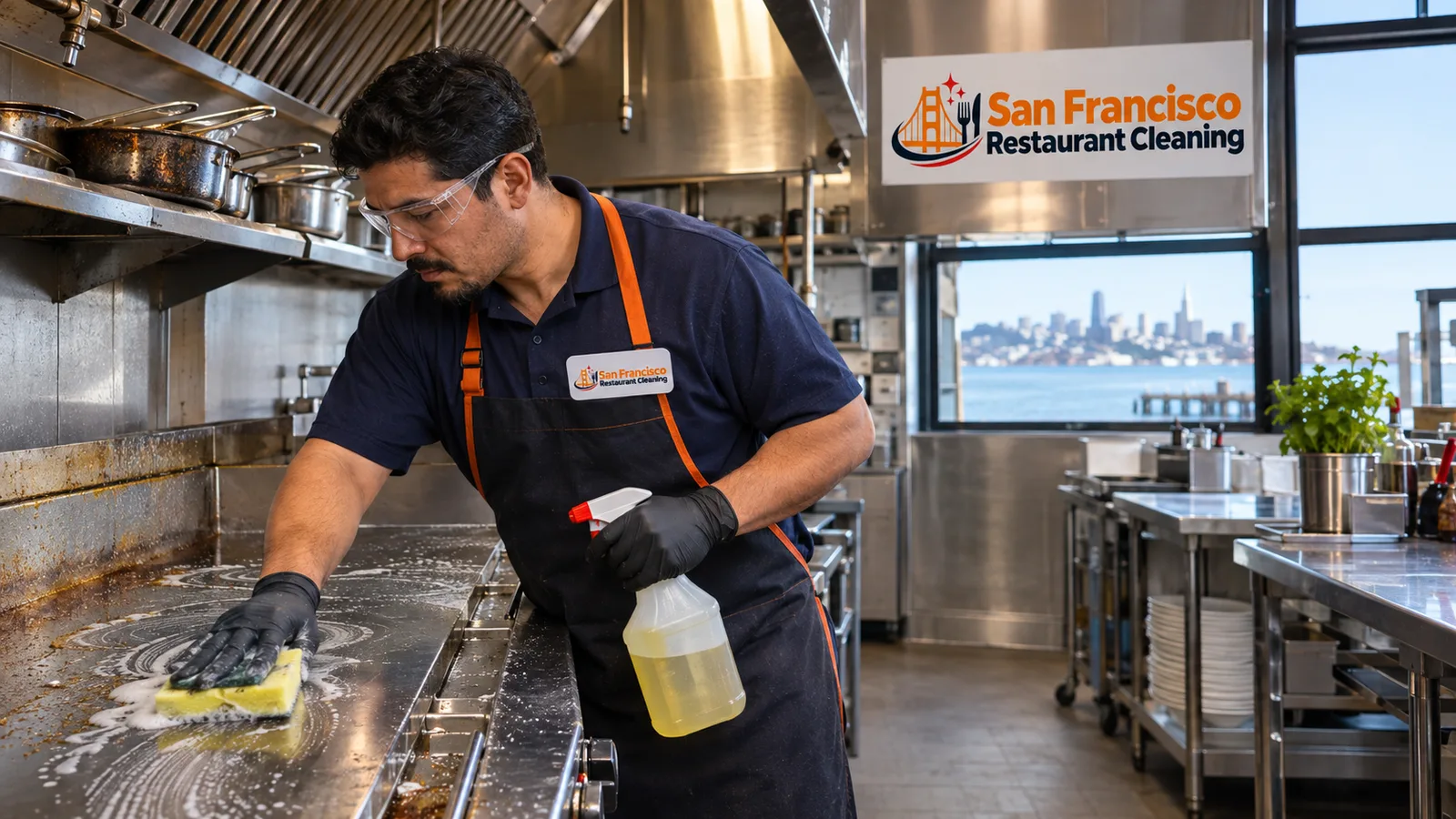
A professional cleaner degreasing stainless steel cooking equipment in a well-maintained Alameda restaurant kitchen

Detailed commercial cookline and equipment care

Professional Restaurant Cleaning for Alameda Food Businesses

Restaurant Cleaning Alameda requires more than a quick wipe-down after service. Grease settles on equipment, vapor reaches walls and overhead surfaces, and food debris collects along edges that routine closing work can miss. San Francisco Restaurant Cleaning provides scheduled cleaning for commercial kitchens, dining rooms, service counters, storage areas, restrooms, and other back-of-house or customer-facing spaces.

Our work can supplement an in-house closing routine or provide a more detailed recurring program. We establish the areas to be cleaned, the required frequency, access arrangements, and any surfaces that need special treatment. Working as a professional restaurant company in San Francisco, CA, we coordinate service across the Bay with practical attention to travel, building access, and the limited windows available between closing and prep.

Alameda restaurants operate in several distinct settings. Park Street businesses often need work planned around storefront access and nearby activity. Webster Street restaurants may have compact service areas where crews must sequence equipment and floor cleaning carefully. At Alameda Point, larger or converted commercial spaces can require longer routes between kitchen, storage, and dining areas. South Shore Center locations may also have property access rules or shared loading arrangements that must be confirmed before work begins.

Request a Callback

Complete Restaurant Care

What Restaurant Cleaning Alameda Can Cover

Commercial Kitchen Cleaning

Degreasing for prep surfaces, backsplashes, appliance exteriors, washable walls, shelving, sinks, and accessible areas around the cook line. Products and methods are selected for stainless steel, tile, sealed flooring, and other commercial finishes.

Restaurant Equipment Cleaning

Detail work for accessible components and exterior surfaces on ranges, fryers, ovens, griddles, refrigeration units, prep equipment, and dishwashing stations. Equipment is handled according to the agreed scope and manufacturer care requirements.

Floor and Edge Care

Scrubbing and degreasing address traffic lanes, corners, grout lines, wall edges, and reachable spaces beneath movable items. The method depends on the floor material, soil load, drainage, and slip concerns.

Dining and Service Areas

Cleaning may include tables, chair surfaces, booths, counters, partitions, baseboards, doors, and other high-contact points. Work is coordinated so cleaned customer areas are ready before the next service period.

Restrooms and Staff Areas

Fixtures, partitions, mirrors, dispensers, touchpoints, and washable floors receive consistent attention. Staff rooms and lockers can be included when they are part of the written scope.

Targeted Deep Cleaning

One-time or periodic work can address accumulated grease, neglected edges, high-use prep zones, and hard-to-reach surfaces. A walkthrough identifies access limits and areas requiring extra time.

Surface-Specific Equipment Care

Restaurant Equipment Cleaning in Alameda

Restaurant Equipment Cleaning Alameda starts with knowing what can be safely cleaned and what requires a trained equipment technician. Our cleaners address agreed, accessible surfaces and removable parts that are suitable for cleaning. We do not disassemble gas, electrical, refrigeration, or fire-suppression components unless that work falls within the proper technical scope.

A typical equipment-cleaning sequence begins after appliances are shut down, cooled, and made safe to approach. Loose debris is removed before an appropriate degreaser is applied. The cleaner observes the product's required dwell time, agitates stubborn soil, removes residue, and dries or polishes the surface as appropriate. Food-contact surfaces require a final treatment compatible with the restaurant's sanitation procedure.

Stainless steel needs nonabrasive tools and cleaning with the grain to reduce visible scratching. Aluminum, painted panels, control markings, stone, and certain plastics may react poorly to aggressive alkaline products. During the initial walkthrough, we note sensitive finishes, fixed equipment, movable units, utility connections, and the clearance available for cleaning behind or beneath appliances.

Request a Callback
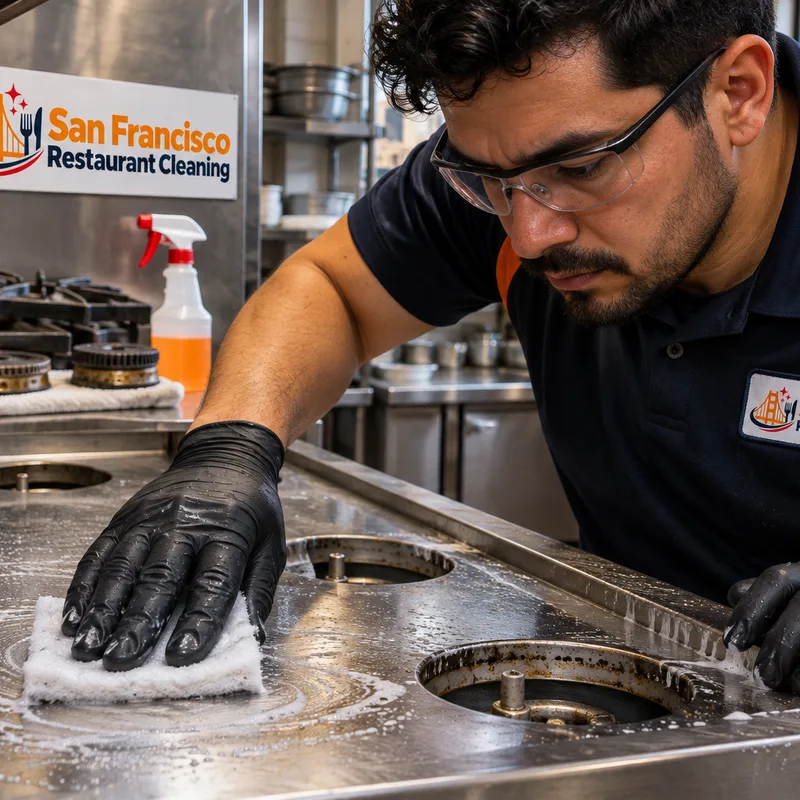
Close view of a cleaner using a nonabrasive pad on a stainless steel restaurant range after removable parts have been set aside for cleaning
Equipment care matched to the surface, soil, and safe access limits.

Ordered Service Plan

How We Build a Practical Cleaning Plan

Every service is organized around the restaurant's layout, operating window, cleaning priorities, and safe access requirements.

01

Walk Through the Restaurant

We review the cook line, prep and warewashing areas, storage, floors, dining room, restrooms, and access points. The walkthrough also identifies sensitive materials, fixed equipment, heavy buildup, and areas managed by another vendor.

02

Define the Scope and Schedule

The written plan states what will be cleaned, how often service will occur, and which tasks are periodic rather than part of every visit. We also confirm alarm procedures, keys, parking or loading arrangements, and the available cleaning window.

03

Prepare and Clean in Sequence

The crew follows a planned order to limit cross-contamination and avoid re-soiling finished areas. Dry debris removal normally comes before wet cleaning, while equipment and elevated surfaces are addressed before the final floor work.

04

Review the Completed Work

The crew checks the agreed work areas, returns movable items as specified, and reports access problems or conditions outside the scope. Recurring plans can be adjusted when menu, hours, equipment, or soil levels change.

Request a Callback

Practical Sanitation Standards

Cleaning Methods That Fit a Working Commercial Kitchen

A restaurant cleaning program should separate routine sanitation from periodic detail work. Daily staff tasks often focus on food-contact surfaces, spills, waste, and the immediate cook line. Professional service can add scheduled attention to equipment exteriors, floor edges, walls, shelving, dining areas, and buildup that cannot be handled during a short closing shift.

The chemistry matters. Degreasers need enough dwell time to loosen fats, but stronger is not automatically better. The product must be compatible with the surface, applied at the correct dilution, and removed as directed. Color-coded microfiber cloths, separate tools for restrooms, and a clean-to-dirty workflow help control where soil is carried. Safety data sheets should be available for the chemicals used, and products should never be mixed unless their manufacturer specifically directs it.

The San Francisco Bay creates humid, salt-air conditions around Alameda, especially near waterfront locations. That makes complete rinsing and drying useful on compatible metal surfaces because lingering moisture and chemical residue can affect appearance. Each restaurant still needs an individual plan based on its ventilation, cooking volume, materials, and operating schedule.

Cleaning also needs clear boundaries. Hood exhaust systems and ducts, grease traps, pest control, equipment repair, and fire-suppression systems are specialized work. If one of these conditions is found during cleaning, it should be documented and referred to the appropriate qualified provider rather than treated as ordinary janitorial work.

Request a Callback
A uniformed restaurant cleaning crew preparing color-coded tools and floor equipment outside an Alameda commercial kitchen after closing
Crew preparation for organized after-hours restaurant cleaning

Alameda Service Scheduling

Service Planned Around Alameda Operations

Restaurant cleaning is easiest to manage when the crew understands how the business operates. A coffee shop with early preparation has a different access window than a dinner restaurant closing late at night. A compact Park Street kitchen may require equipment to be handled in a strict order, while a larger Alameda Point venue may need several zones released at different times.

Recurring frequency depends on the task. High-use floors and touchpoints may need attention each service, while walls, shelving, equipment sides, and detailed edge work can rotate through a periodic schedule. Cooking methods also affect the plan. Frying and high-heat cooking create different grease loads than baking, beverage service, or cold preparation.

Before the first visit, management should identify restricted areas, delicate surfaces, equipment that cannot be moved, and the person authorized to approve additional work. Clear notes about alarms, doors, waste handling, and opening deadlines help the crew complete its scope without interfering with the next shift.

Request a Callback

Arrange a walkthrough to turn general cleaning needs into a written scope, realistic schedule, and clear equipment-care plan.

Call for a Free Quote

Practical Answers

Questions About Restaurant Cleaning in Alameda

How much does restaurant cleaning cost in Alameda?

Restaurant cleaning is usually priced after a walkthrough because kitchen size, grease buildup, equipment count, floor condition, service frequency, and access window can change the labor required. A one-time deep clean generally costs more per visit than a recurring maintenance plan with a stable scope. The written estimate should identify included areas, periodic tasks, exclusions, and any charge tied to difficult access or heavy restoration work.

Can cleaning take place after the restaurant closes?

Yes, service can often be scheduled after closing or during another low-activity window, subject to crew availability and the time needed before preparation resumes. Alameda locations should provide clear instructions for doors, alarms, keys, parking, and building access. Equipment must have enough time to cool when heat would make cleaning unsafe.

What is included in Restaurant Equipment Cleaning Alameda service?

Equipment cleaning can include approved removable parts, accessible exterior surfaces, control surrounds, sides, splash areas, and reachable spaces beneath or behind movable units. The exact list is recorded during the walkthrough. Internal mechanical repairs, refrigeration work, gas components, electrical systems, hood ducts, and fire-suppression equipment require appropriately qualified specialists.

Do we need to move food and small equipment before the crew arrives?

Food, utensils, and portable prep items should be stored or removed from the work area before cleaning begins. Management should also label equipment that cannot be moved and identify any surface with special manufacturer instructions. This preparation gives cleaners safe access and reduces the chance of exposing stored items to moisture or cleaning products.

How often should an Alameda restaurant schedule professional cleaning?

The right frequency depends on cooking volume, menu, hours, floor traffic, ventilation, and the amount of cleaning handled by staff. Busy grease-producing lines usually need more frequent detail care than cold-prep operations. Many plans combine recurring visits with rotating tasks so walls, shelving, equipment sides, and edges are addressed before buildup becomes difficult to remove.

Can you prepare the restaurant for a health inspection?

A detailed cleaning can address many visible sanitation and housekeeping concerns, but no cleaning company can promise an inspection outcome. Alameda food facilities are regulated by the Alameda County Department of Environmental Health, and operators remain responsible for food safety practices, temperatures, storage, pest prevention, and equipment condition. Cleaning should support the restaurant's ongoing compliance program rather than occur only before an inspection.

Will the same cleaning products be used on every surface?

No, products and tools should be matched to the surface and type of soil. Stainless steel, aluminum, painted controls, tile, grout, sealed flooring, and food-contact surfaces may require different chemistry or handling. The crew should review delicate finishes and manufacturer care instructions before beginning aggressive degreasing or abrasion.

Scope, access and operating windows confirmed before service

Plan Reliable Cleaning for Your Alameda Restaurant

Tell San Francisco Restaurant Cleaning about your operating hours, kitchen layout, equipment, and problem areas. We will use that information to prepare a clear scope and schedule for the work.