Restaurant Cleaning · San Francisco

Restaurant Cleaning Services

Detailed recurring and one-time cleaning for dining rooms, bars, restrooms, floors, and back-of-house areas, scheduled around your operating hours.

Recurring or one-time cleaning

Front and back of house

Scheduled around operations

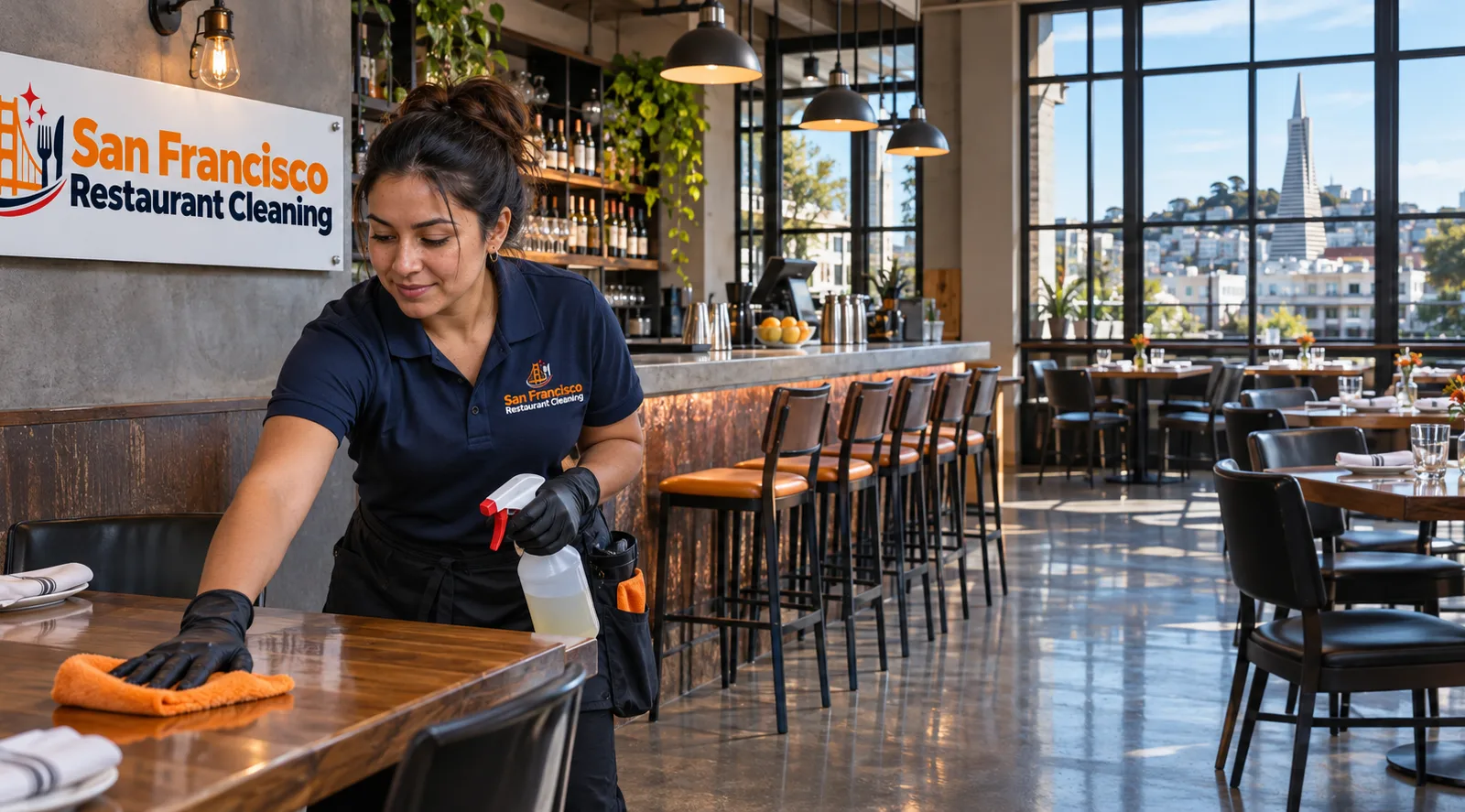
A professional cleaner preparing a polished restaurant dining room before opening, with clean tables, chairs, floors, and bar surfaces visible

Guest-ready dining room cleaning before opening

A Cleaning Plan Built Around Your Restaurant

Restaurant Cleaning Services should support daily operations without getting in the way of staff, deliveries, prep, or guests. San Francisco Restaurant Cleaning develops a written scope based on your floor plan, service hours, traffic patterns, surfaces, and division of duties. Recurring work can be arranged before opening, after closing, or during another agreed service window.

We are restaurant specialists serving San Francisco, CA who clean guest-facing and staff work areas with separate tools and procedures appropriate to each zone. The plan identifies what is cleaned each visit, which detail tasks rotate, and any areas that require manager access. That distinction matters in compact San Francisco restaurants, where bars, dining rooms, storage, and prep areas may be close together.

Restaurants near Union Square often deal with steady guest turnover and heavily used entries. North Beach dining rooms may have compact layouts that require careful chair and table movement. The Mission has many active restaurant corridors where tracked-in grit can quickly mark hard floors. In SoMa, larger dining rooms and event-oriented spaces may need cleaning coordinated with changing service schedules. These operating conditions shape the scope rather than being treated as generic add-ons.

Request a Callback

Complete Operating-Zone Scope

Restaurant Cleaning Services for Every Operating Zone

Dining Area Cleaning

Restaurant dining room cleaning can include tables, chair backs and legs, booths, ledges, partitions, host stands, baseboards, reachable fixtures, and spot cleaning of contact points. The service plan accounts for wood, laminate, upholstery, glass, metal, and other finishes.

Front Of House Cleaning

Restaurant front of house cleaning in San Francisco covers the areas guests notice first, including entries, waiting areas, dining rooms, service stations, and visible interior glass. Soil is removed rather than spread between surfaces.

Restaurant Bar Cleaning

Bar cleaning addresses counters, stools, rails, shelving exteriors, fronts, mirrors, accessible equipment exteriors, and floors. Cleaning tools used at the bar are kept separate from restroom tools to reduce cross-contamination.

Restroom Cleaning

Restaurant restroom cleaning in San Francisco includes toilets, urinals, sinks, mirrors, partitions, dispensers, touchpoints, floors, and odor-source removal. Consumable restocking can be included when supplies are provided and added to the written scope.

Restaurant Floor Cleaning

Floor care is matched to the material and soil load. Work may include vacuuming, sweeping, damp mopping, machine scrubbing, edge cleaning, spot treatment, and scheduled detail work for tile, sealed concrete, resilient flooring, and carpet.

Back Of House Cleaning

Restaurant back of house cleaning in San Francisco can cover accessible prep-area surfaces, storage-area floors, employee areas, washable walls, equipment exteriors, and floor edges. Food-contact tasks and equipment access are defined with management before service begins.

Top-to-Bottom Detail Work

High Dusting and Detailed Cleaning

High dusting targets settled material on vents, pipes, beams, ledges, signs, light housings, and other elevated surfaces within the agreed and safely accessible scope. These areas need planned attention because loose dust can fall onto tables, counters, bottles, or freshly cleaned floors if the work is done in the wrong order.

Our crews generally work high to low, then dry to wet. High dusting and cobweb removal come before wiping lower surfaces. Floors are cleaned last after chairs, mats, and movable items are handled according to the plan. Color-coded cloths and dedicated restroom equipment help keep tools assigned to the right cleaning zone.

San Francisco's foggy and rainy periods can increase moisture and tracked-in soil at entrances. Matting, edge work, and more frequent attention to the first stretch of flooring may be needed during wet weather. Wind at street-level entries can also carry litter and grit into vestibules, making entry maintenance an operational priority rather than a cosmetic extra.

Request a Callback
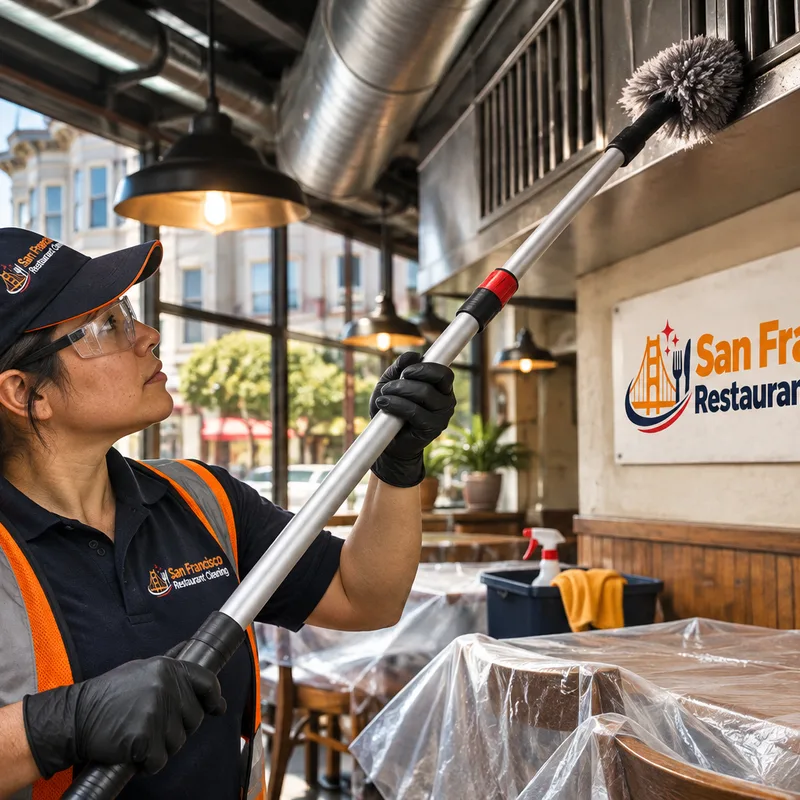
A trained restaurant cleaner using an extension tool to remove dust from elevated vents and ledges while dining surfaces remain protected
High dusting is completed before lower surfaces and floors are cleaned.

Ordered Service Plan

How Restaurant Cleaning Is Set Up

Each service follows a defined sequence from walkthrough and scope through cleaning, review, and adjustment.

01

Walk Through the Restaurant

We review the dining room, bar, restrooms, entries, floors, service stations, and agreed back-of-house spaces. The walkthrough identifies finishes, access restrictions, recurring problem areas, and where restaurant staff responsibilities end.

02

Define the Scope and Schedule

The written plan lists tasks by area and frequency. It also records the service window, entry procedure, alarm instructions, supply responsibilities, waste handling expectations, and any areas that require manager approval.

03

Prepare and Clean by Zone

Crews follow an ordered route and use zone-specific tools. Elevated dust is addressed first, touchpoints and furnishings follow, restrooms receive dedicated equipment, and floors are completed near the end of the visit.

04

Check the Work

The completed areas are reviewed against the scope. Any access issue, damaged fixture, unusual buildup, or supply shortage can be documented so management knows what affected that visit.

05

Adjust as Operations Change

Service frequency can be reviewed when hours, menus, seating, events, or seasonal traffic change. Updating the written scope keeps expectations clear for managers and cleaning crews.

Request a Callback

A walkthrough turns general cleaning needs into a clear scope, practical schedule, and defined responsibilities for every restaurant zone.

Call for a Free Quote
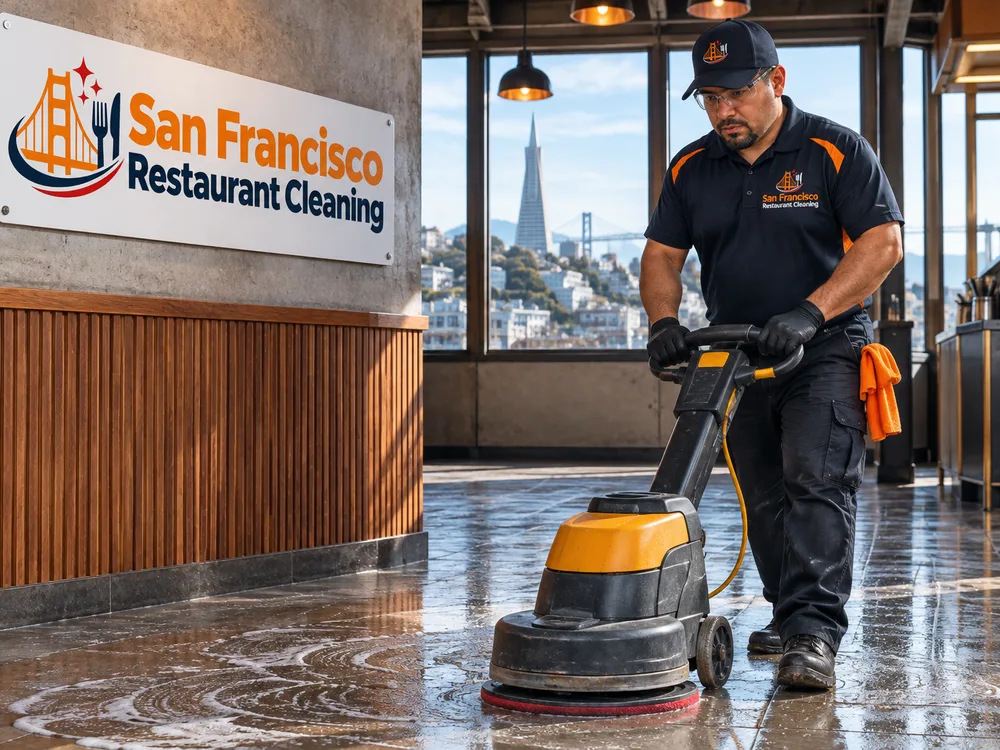
A restaurant cleaning professional using a compact floor machine on a hard dining room floor after tables and chairs have been safely moved
Floor methods are selected for the material, soil, and available drying time.

Material-Specific Floor Care

Floor Care for Busy Dining Rooms and Bars

Restaurant floor cleaning starts with identifying the flooring and the soil. Grease near service routes needs a different approach than beverage residue at a bar, grit at an entry, or crumbs under booths. Using too much chemical can leave a film that attracts soil, while excess water may create slip risks or affect moisture-sensitive materials.

The routine may include dry soil removal, treatment of visible spots, properly diluted cleaning solution, agitation where suitable, and recovery of dirty solution. Edges, corners, under-table areas, and paths around fixed equipment need deliberate attention. Carpeted dining areas typically require regular vacuuming plus scheduled extraction or low-moisture cleaning based on fiber, condition, and drying time.

For tile and grout, soil often collects along grout lines and perimeter edges. Sealed concrete and resilient flooring require compatible products that do not damage the finish. Service timing should also leave enough time for floors to dry before employees or guests re-enter the area.

Request a Callback

Defined Food-Service Standards

Cleaning Standards That Fit Food-Service Operations

Restaurant cleaning is different from general office cleaning because the property contains food-service zones, heavy traffic, mixed surface materials, and strict separation needs. A useful scope distinguishes cleaning from sanitizing and disinfecting. Cleaning removes soil and residue. Sanitizing or disinfecting requires a suitable product, correct dilution, full label contact time, and surface compatibility.

Food-contact surfaces require special handling. Management should identify which food-contact tasks are assigned to restaurant employees and which, if any, are included in the cleaning agreement. Cleaning chemicals must be used according to their labels and should never be mixed. Safety Data Sheets should remain available for products used at the property.

San Francisco restaurants operate under the oversight of the San Francisco Department of Public Health for food-facility requirements. A cleaning contractor does not replace an operator's food-safety program, employee hygiene procedures, pest-control plan, or equipment maintenance. Our role is to complete the agreed cleaning tasks consistently and report visible conditions that need management attention.

We can also document exclusions such as hood and duct cleaning, pest treatment, hazardous-material cleanup, and internal cleaning of specialized equipment. Clear boundaries help restaurant managers assign regulated or specialist work to the appropriate provider.

Request a Callback

Practical Answers

Questions Restaurant Managers Ask

How much do restaurant cleaning services cost in San Francisco?

Restaurant cleaning is usually priced after a walkthrough because floor area, service frequency, operating hours, condition, and task list can change labor substantially. Restroom count, bar detail, high dusting, floor type, access, and whether furniture must be moved also affect the quote. The written proposal should state the included areas, visit frequency, and periodic tasks.

Can cleaning be completed after the restaurant closes?

Yes, service can often be scheduled after closing, before opening, or during another agreed low-activity window. The final arrangement depends on staff departure, last food-prep tasks, alarm procedures, building access, noise restrictions, and the time floors need to dry.

What is included in restaurant front of house cleaning in San Francisco?

Front-of-house cleaning can include entries, host stands, dining furniture, booths, ledges, service stations, visible glass, touchpoints, and floors. The exact list is confirmed during the walkthrough because compact dining rooms in neighborhoods such as North Beach may require specific instructions for moving and replacing furniture.

Do you provide restaurant back of house cleaning in San Francisco?

Yes, agreed back-of-house areas can be included when access, surface type, equipment boundaries, and food-contact responsibilities are clearly defined. Typical work may cover floors, washable wall areas, storage zones, employee spaces, and accessible equipment exteriors, while specialized hood, duct, and hazardous cleanup remain separate.

How often should a restaurant restroom be professionally cleaned?

The correct frequency depends on guest volume, hours, fixture count, and what employees maintain during service. A high-use restroom may need staff checks throughout operating hours plus a detailed scheduled cleaning that addresses fixtures, partitions, dispensers, touchpoints, floors, corners, and odor sources.

Can you clean the dining room without damaging tables or upholstery?

Yes, the method should be selected after identifying each finish and checking manufacturer guidance when available. Wood, stone, coated metal, laminate, vinyl, fabric, and leather-like upholstery may require different products, moisture levels, and test spots.

Is high dusting included in every visit?

High dusting is included only when it appears in the agreed scope and can be completed with safe access. Some restaurants schedule reachable ledges and vents on a rotation, while areas involving difficult access, fragile fixtures, or specialized lift equipment require separate planning.

How quickly can recurring service begin?

The start date depends on walkthrough availability, scope approval, access arrangements, and the requested service window. Before the first visit, managers should provide entry instructions, identify restricted areas, confirm supply responsibilities, and note alarm or lock-up procedures.

A written scope and workable schedule before service begins

Set Up a Cleaner, Guest-Ready Restaurant

Tell San Francisco Restaurant Cleaning about your dining room, bar, restrooms, floors, back-of-house areas, and preferred service window. We will turn those needs into a written scope and workable cleaning schedule.